
Rate My Professor Phil Christensen

Ratings & reviews
A true gem in the academic community.
Helps students see the bigger picture.
Taught by or worked with Phil?
Add your rating. It takes about 30 seconds.
About Phil
Philip R. Christensen is a Regents’ Professor of Geological Sciences and the Ed and Helen Korrick Professor in the School of Earth and Space Exploration at Arizona State University, specializing in Space Science. He earned his B.S. in Geology from the University of California in 1976 and his Ph.D. in Geophysics and Space Physics from the University of California, Los Angeles, in 1981. Christensen's research centers on the composition, physical properties and processes, and morphology of planetary surfaces, with particular emphasis on Mars and Earth. He utilizes infrared spectroscopy, radiometry, laboratory spectroscopic measurements, field observations, and numerical modeling. His fieldwork spans sites in the western United States, Hawaii, Mexico, and South America. Since the mid-1990s, he has leveraged spacecraft observations to investigate environmental and urban development challenges on Earth.
A pivotal aspect of his career involves the development of infrared remote sensing instruments for NASA missions. Christensen served as Principal Investigator for the Thermal Emission Spectrometer (TES) on Mars Global Surveyor and the Thermal Emission Imaging System (THEMIS) on the 2001 Mars Odyssey orbiter. He was Co-Investigator for the Miniature Thermal Emission Spectrometers (Mini-TES) aboard the Mars Exploration Rovers and is the Instrument Scientist for the OSIRIS-REx Thermal Emission Spectrometer (OTES) on the OSIRIS-REx mission to asteroid Bennu. Instruments under his leadership for future missions include the Lucy Thermal Emission Spectrometer (L’TES) for NASA's Lucy mission to Jupiter’s Trojan asteroids, E-THEMIS for the Europa Clipper mission, and a Mars atmosphere spectrometer for the United Arab Emirates' Hope mission. Key publications encompass "The Atlas of Mars: Mapping its Geography and Geology" (Cambridge University Press, 2019), "Properties of rubble-pile asteroid (101955) Bennu from OSIRIS-REx imaging and thermal analysis" (Nature Astronomy, 2019), and "Morphology and Composition of the Surface of Mars" (Science, 2003). His profound influence in planetary science is evidenced by prestigious honors, including the American Geophysical Union’s Fred Whipple Award (2018), Geological Society of America’s G.K. Gilbert Award (2008), NASA’s Exceptional Scientific Achievement Medal (2003), and election as a Fellow of the American Geophysical Union (2004). Christensen co-chaired the National Academies of Sciences, Engineering, and Medicine’s 2023-2032 Decadal Survey on Planetary Science and Astrobiology.
Trending Geoscience Research & Publication News

Academic Mobility After US Funding Freezes | AcademicJobs
Photo by Jorge Fernández Salas on Unsplash

Beach Science: 7 Things to Teach Kids | AcademicJobs
Photo by Caroline Pasarin on Unsplash

When Does Fog Happen? Timing and Conditions | AcademicJobs
Photo by Nathan Anderson on Unsplash

Pumice Research Reveals Unique Qualities | AcademicJobs
Photo by Amin Hasani on Unsplash

Mongibello Etna History and Research Findings | AcademicJobs
Photo by Julia Taubitz on Unsplash

Tungsten Wolfram Explained: Properties and Supply | AcademicJobs
Photo by Güleren E. on Unsplash
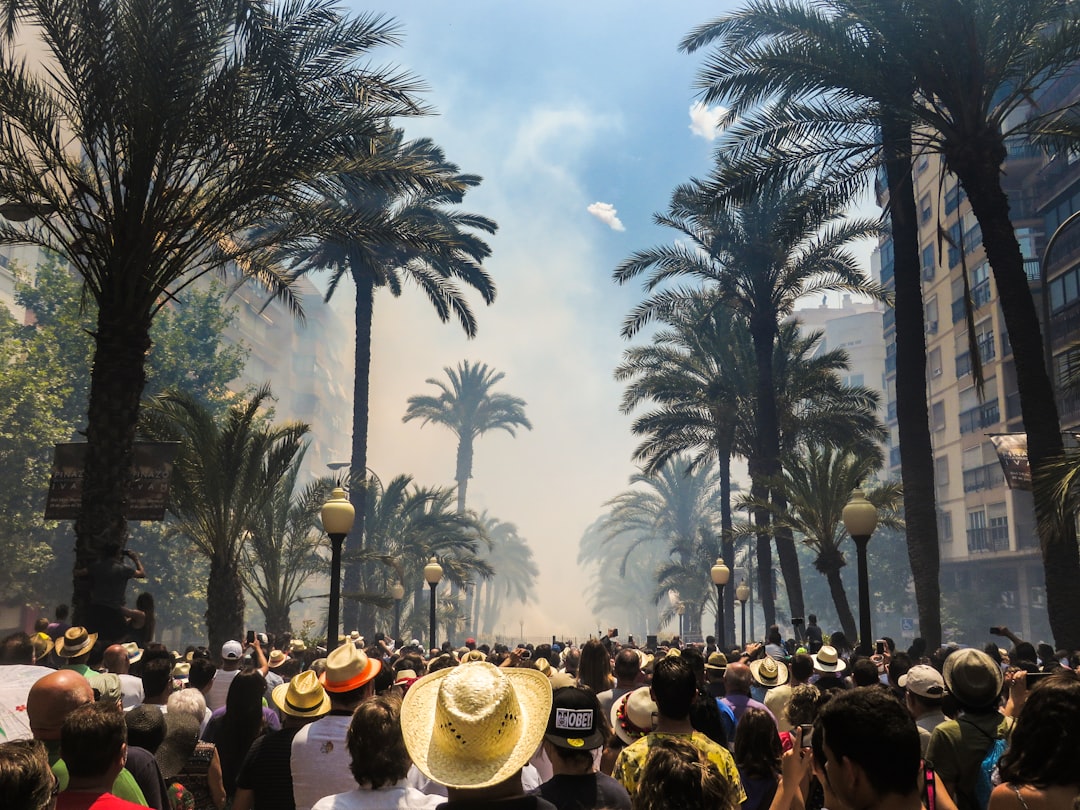
Extreme Heat Records Spain: University Research Impacts 2026
Photo by Lucas Davies on Unsplash