

Ratings & reviews
Always positive and enthusiastic in class.
Taught by or worked with Dominick?
Add your rating. It takes about 30 seconds.
About Dominick
Professor Dominick Spracklen is Professor of Biosphere-Atmosphere Interactions in the School of Earth, Environment and Sustainability at the University of Leeds. He obtained an MChem degree in Chemistry from the University of Leeds in 1999 and a PhD in 2005 from the same institution, with his doctoral thesis entitled 'Development and Application of a Global Model of Aerosol Processes.' Spracklen's research specializations encompass air pollution, climate, aerosols, land-atmosphere interactions, forest fires, deforestation, land-use change, and conservation. He leads a research group focused on how human activities alter interactions between the biosphere, atmosphere, and climate. As Scientific Lead for the United Bank of Carbon (UBoC), a non-profit organization, he works to protect, plant, and restore forests. Spracklen is a co-investigator on projects including the LONG FALLOWS Project on swidden natural-forest re-growth cycles, Plant physiological Effect on Amazon Moisture Budget, SafeNet, and The Amazon hydrological cycle: past, present and future. He serves as a member of the Wild Ingleborough Steering Group.
Spracklen held a Natural Environment Research Council (NERC) Advanced Fellowship from 2009 to 2014. In 2016, he received the Philip Leverhulme Prize. He was awarded a European Research Council (ERC) Consolidator Fellowship in 2018, valued at €2 million over five years, to investigate the climate and air quality impacts of tropical deforestation, including effects from carbon emissions, land-atmosphere water and energy transfers, and smoke from fires. Recognized as a highly cited researcher in 2016, Spracklen has amassed over 27,954 citations and an h-index of 89 on Google Scholar. His key publications include 'A review of natural aerosol interactions and feedbacks within the Earth system' by Carslaw et al., 'Trees, forests and water: Cool insights for a hot world' by Ellison et al. (2017, cited over 1,500 times), 'Climate Benefits of Intact Amazon Forests and the Effective Carbon Rates of Selective Logging in Western Amazonia' by Baker et al. (2019), and 'Globally significant oceanic source of organic carbon aerosol' (2008). His work has significantly influenced understanding of aerosol-climate feedbacks, deforestation's regional climate effects, and forest conservation strategies.
Trending Geoscience Research & Publication News

Academic Mobility After US Funding Freezes | AcademicJobs
Photo by Jorge Fernández Salas on Unsplash

Beach Science: 7 Things to Teach Kids | AcademicJobs
Photo by Caroline Pasarin on Unsplash

When Does Fog Happen? Timing and Conditions | AcademicJobs
Photo by Nathan Anderson on Unsplash

Pumice Research Reveals Unique Qualities | AcademicJobs
Photo by Amin Hasani on Unsplash

Mongibello Etna History and Research Findings | AcademicJobs
Photo by Julia Taubitz on Unsplash

Tungsten Wolfram Explained: Properties and Supply | AcademicJobs
Photo by Güleren E. on Unsplash
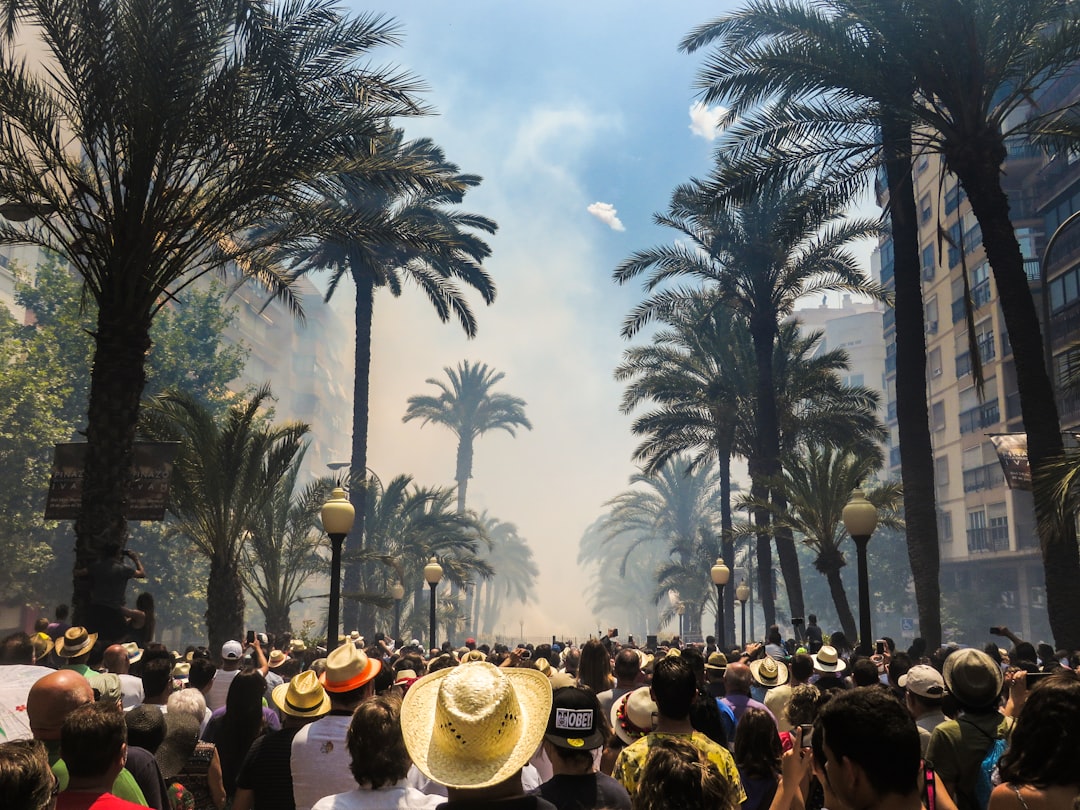
Extreme Heat Records Spain: University Research Impacts 2026
Photo by Lucas Davies on Unsplash