
Ratings & reviews
Helps students see the bigger picture.
Taught by or worked with Darren?
Add your rating. It takes about 30 seconds.
About Darren
Professor Darren Mark serves as Professor of Isotope Geochronology and Director of the Scottish Universities Environmental Research Centre (SUERC) at the University of Glasgow. He heads the Argon isotope laboratory and leads the Geochronology & Geochemistry Research Group (G2RG) based at SUERC. With more than 15 years of experience in various roles within the University of Glasgow and SUERC, he has assembled a world-class group of researchers, including technicians, postdoctoral researchers, and experienced scientists. He has fostered a global-scale collaborative network centered around state-of-the-art laboratories in East Kilbride, delivering high-impact research funded by NERC, STFC, EU, Carnegie Trust, Leverhulme Trust, and the UK Space Agency. His efforts aim to strengthen UK science, maximize the societal impact of SUERC and the University of Glasgow, drive innovation, enhance the quality of the next generation of scientists, and engage the public.
Mark's research specializations encompass high-precision geochronology, noble gas mass spectrometry and technology development, clumped isotope mass spectrometry and applications, terrestrial volcanism, Quaternary climate change and human evolution, geomagnetism and dynamo processes, and planetary science. He provides world-leading expertise in constructing seamless chronologies spanning 4.6 billion years of Solar System evolution, essential for advancements in Earth, Planetary, and Environmental Sciences. Notable contributions include co-authoring the determination of the age of the oldest known Homo sapiens from eastern Africa (Vidal et al., Nature, 2022), timescales for pluton growth, magma-chamber formation, and super-eruptions (van Zalinge et al., Nature, 2022), chronology of the Martian breccia NWA 7034 and formation of the Martian crustal dichotomy (Cassata et al., Science Advances, 2018), bridging the gap in dating volcanic eruptions from the Age of Discovery (Preece et al., Geology, 2018), dating recent aqueous activity on Mars (Tremblay et al., Geochemical Perspectives Letters, 2024), eruption history of the Columbia River Basalt Group (Kasbohm et al., Earth and Planetary Science Letters, 2023), and dynamic collapse and regrowth of the Antarctic Ice Sheet (Neofitu et al., Earth and Planetary Science Letters, 2024). He has produced 142 publications listed from 2005 to 2025, including works on synchronising rock clocks of Mars' history, geochemical analysis of Harrat Rahat, and multi-chronometer dating of geological complexes. Mark serves on the editorial board of Geochronology and contributes to initiatives like the EARTHTIME project and SELFRAG facility development at SUERC.
Trending Geoscience Research & Publication News

Academic Mobility After US Funding Freezes | AcademicJobs
Photo by Jorge Fernández Salas on Unsplash

Beach Science: 7 Things to Teach Kids | AcademicJobs
Photo by Caroline Pasarin on Unsplash

When Does Fog Happen? Timing and Conditions | AcademicJobs
Photo by Nathan Anderson on Unsplash

Pumice Research Reveals Unique Qualities | AcademicJobs
Photo by Amin Hasani on Unsplash

Mongibello Etna History and Research Findings | AcademicJobs
Photo by Julia Taubitz on Unsplash

Tungsten Wolfram Explained: Properties and Supply | AcademicJobs
Photo by Güleren E. on Unsplash
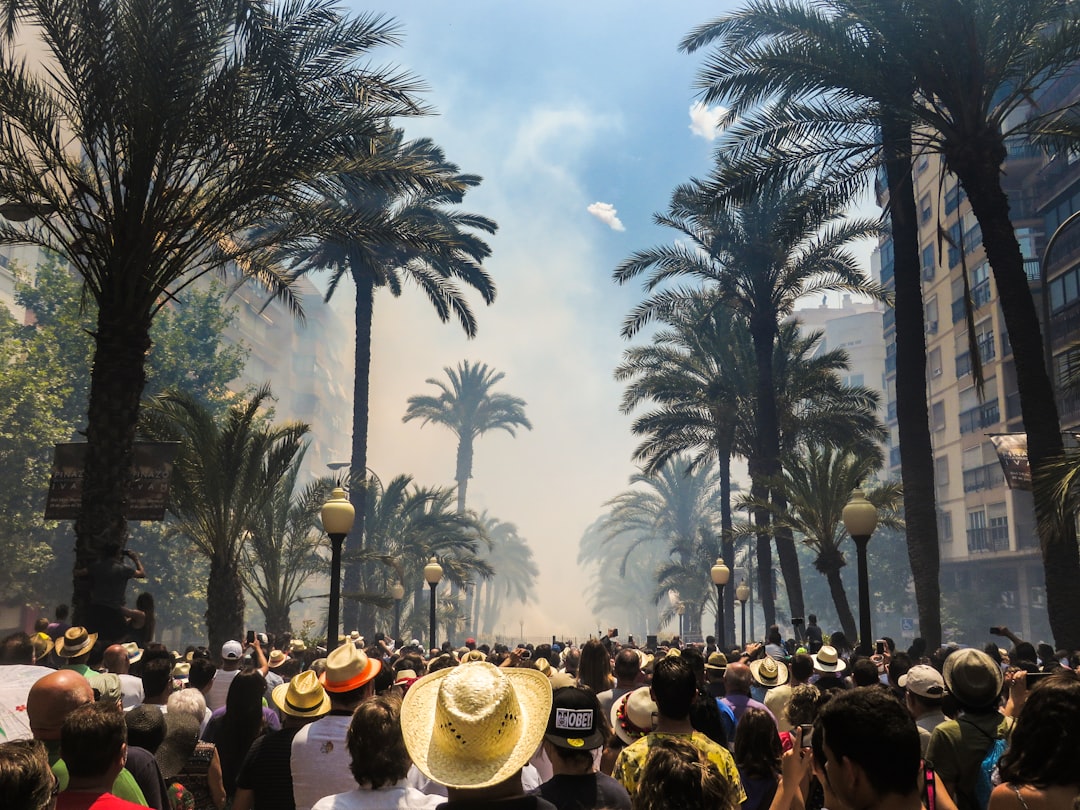
Extreme Heat Records Spain: University Research Impacts 2026
Photo by Lucas Davies on Unsplash