

Always positive, enthusiastic, and supportive.
Associate Professor Christina Riesselman serves as an academic staff member in the Departments of Geology and Marine Science within the Division of Sciences at the University of Otago, New Zealand. She holds a BA in Geology and English from the University of Nebraska-Lincoln and a PhD in Geological and Environmental Sciences from Stanford University, completed in 2011. After her doctoral studies, Riesselman worked as a Research Scientist with the US Geological Survey in a postdoctoral capacity before joining the University of Otago in 2013, where she progressed from Lecturer to Senior Lecturer and now Associate Professor. Her research centers on paleoceanography, with a particular emphasis on the Southern Ocean's response to changing climates throughout the Cenozoic era. Utilizing stable isotope geochemistry and diatom micropaleontology from marine sediment cores, she examines the evolution of the Antarctic cryosphere, Antarctic climate history, and geochemical proxies for paleoenvironmental shifts. Additional interests include modern controls on phytoplankton community structure and carbon sequestration in New Zealand's southern fiords. Riesselman has contributed to International Ocean Discovery Program expeditions and supervises postgraduate students on projects such as sea ice dynamics, nutrient utilization on the Wilkes Land Margin, and paleoclimate reconstructions from Antarctic sediment cores.
Riesselman's scholarly impact is evident in her extensive publication record, including highly cited works like 'Obliquity-paced Pliocene West Antarctic ice sheet oscillations' (Naish et al., Nature, 2009), 'CO2 sensitivity of Southern Ocean phytoplankton' (Tortell et al., Geophysical Research Letters, 2008), 'Eocene cooling linked to early flow across the Tasmanian Gateway' (Bijl et al., PNAS, 2013), 'Antarctic and Southern Ocean influences on Late Pliocene global cooling' (McKay et al., PNAS, 2012), and 'Vitamin B12 and iron colimitation of phytoplankton growth in the Ross Sea' (Bertrand et al., Limnology and Oceanography, 2007). Recent publications include 'Synchronous mid-Holocene marine and terrestrial deglaciation in the Ross Sea, Antarctica' (Parker et al., Nature Communications, 2025) and 'Increased sea ice duration in Moubray Bay, northwest Ross Sea linked to early Holocene wind strength' (Gilmer et al., Paleoceanography and Paleoclimatology, 2025). She received the L'Oréal-UNESCO For Women in Science Fellowship in 2015. At Otago, she coordinates and teaches courses such as Earth and Ocean Science, Geochemistry, Marine Geology and Geophysics, and Antarctic and Southern Ocean Marine Ecosystems, fostering the next generation of earth scientists. Her contributions advance understanding of past climate dynamics to inform future Antarctic ice sheet stability and global climate predictions.

Photo by Caroline Pasarin on Unsplash

Photo by Nathan Anderson on Unsplash

Photo by Amin Hasani on Unsplash

Photo by Julia Taubitz on Unsplash

Photo by Güleren E. on Unsplash
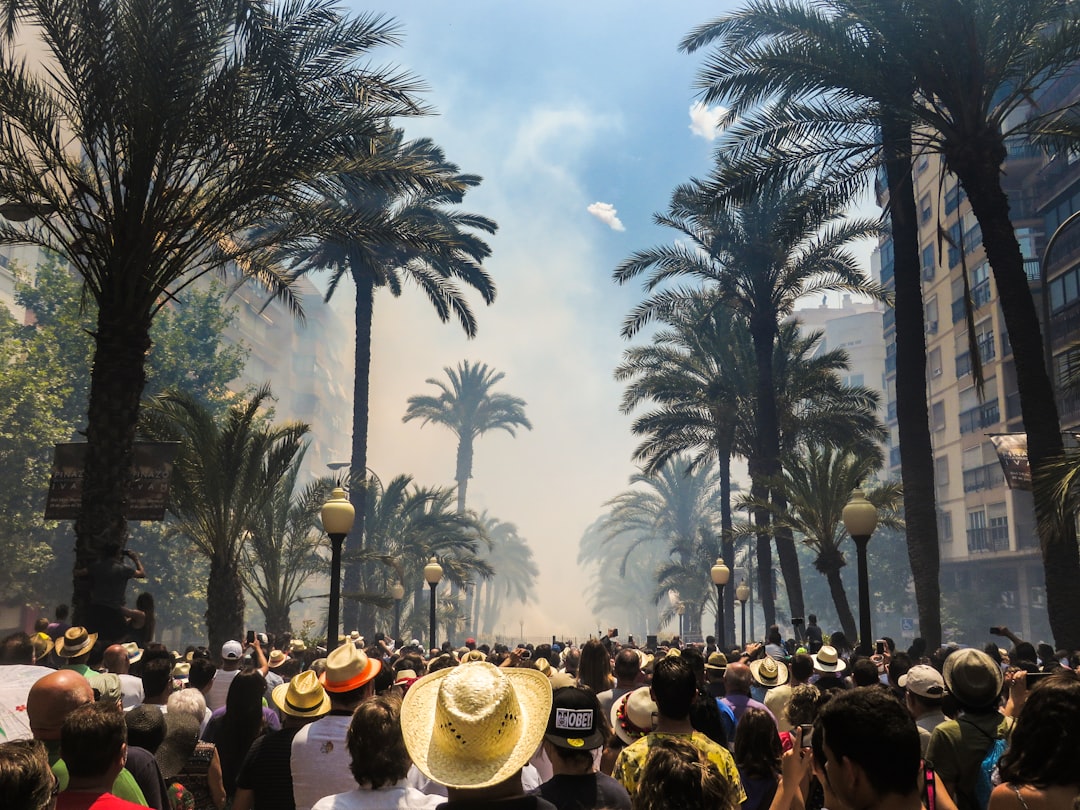
Photo by Lucas Davies on Unsplash

Photo by Brecht Corbeel on Unsplash
Have a story or a research paper to share? Become an Expert Academic Contributor and publish your work on AcademicJobs.com.
Write news and research articles as a expert academic in your field publish your work on AcademicJobs.com