

Inspires a love for learning in everyone.
Professor Alexander Piotrowski is Professor in the Department of Earth Sciences at the University of Cambridge, serving as Reader in Palaeoclimatology and affiliated with the Climate Change and Earth-Ocean-Atmosphere Systems research theme. His research reconstructs the ocean-climate link using geochemical tracers to understand past changes in global ocean overturning circulation, a key component of the Earth's climate system that transports heat and exchanges carbon dioxide with the atmosphere. Piotrowski investigates deep water mass sources and structures, their connections to deep ocean nutrient contents and overturning rates, and interfaces between seawater chemistry and detrital sediments to trace terrestrial weathering, ocean sediment input, and transport.
Employing radiogenic isotopes such as neodymium (Nd) and lead (Pb), along with proxies like 231Pa/230Th ratios, his group analyzes sediment cores from global sites including the Atlantic, Indian, and Pacific Oceans. Specific foci include South Atlantic deep water sourcing during glacial-interglacial transitions, glacial millennial-scale variability, North Atlantic circulation strength, and deglacial water mass changes. Key publications include 'Temporal relationships of carbon cycling and ocean circulation at glacial boundaries' (Science, 2005), 'Oscillating glacial northern and southern deep water formation from neodymium and carbon isotopes' (Earth and Planetary Science Letters, 2008), 'Synchronous deglacial overturning and water mass source changes' (Science, 2010), 'Reconstructing deglacial North and South Atlantic deep water source using foraminiferal Nd isotopes' (Earth and Planetary Science Letters, 2012), 'North Atlantic Deep Water Production during the Last Glacial Maximum' (Nature Communications, 2016), and 'North Atlantic ocean circulation and abrupt climate change during the last glaciation' (Science, 2016). In 2020, Dr. Alexander Piotrowski was appointed Reader in Palaeoclimatology and assigned to the Department of Earth Sciences. He leads a research group, supervises PhD students, and contributes to university bodies such as the Marr Memorial Fund awarders.

Photo by Caroline Pasarin on Unsplash

Photo by Nathan Anderson on Unsplash

Photo by Amin Hasani on Unsplash

Photo by Julia Taubitz on Unsplash

Photo by Güleren E. on Unsplash
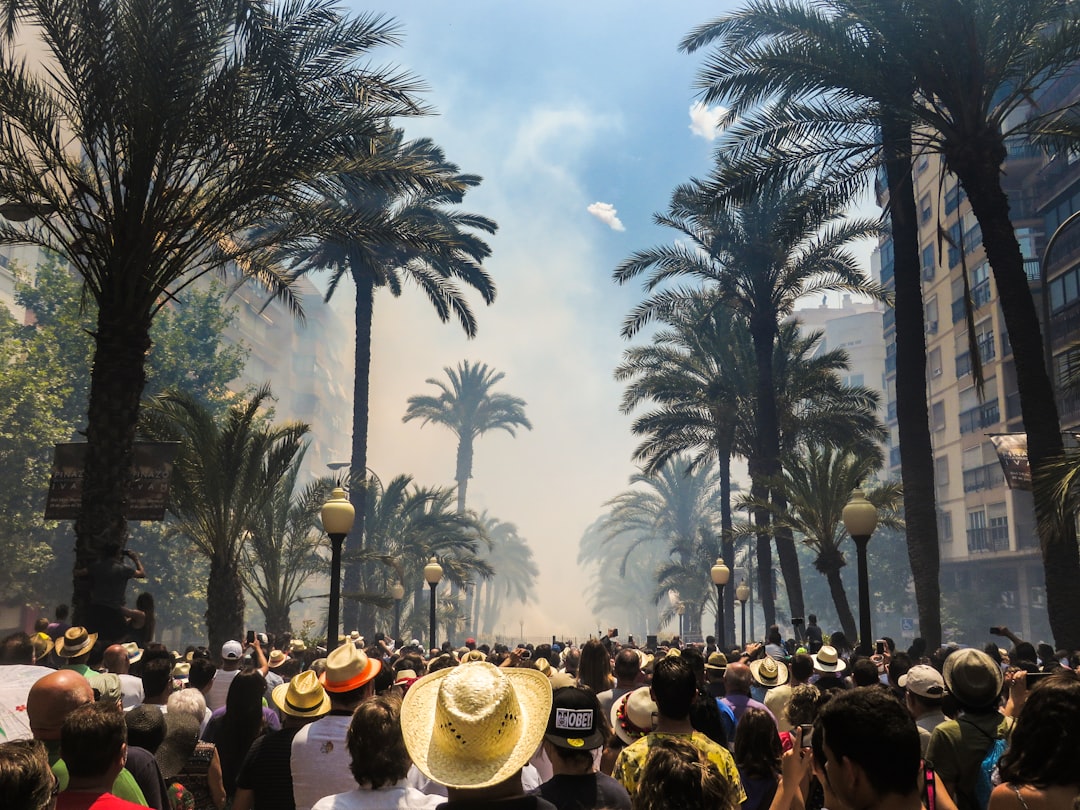
Photo by Lucas Davies on Unsplash

Photo by Brecht Corbeel on Unsplash
Have a story or a research paper to share? Become an Expert Academic Contributor and publish your work on AcademicJobs.com.
Write news and research articles as a expert academic in your field publish your work on AcademicJobs.com